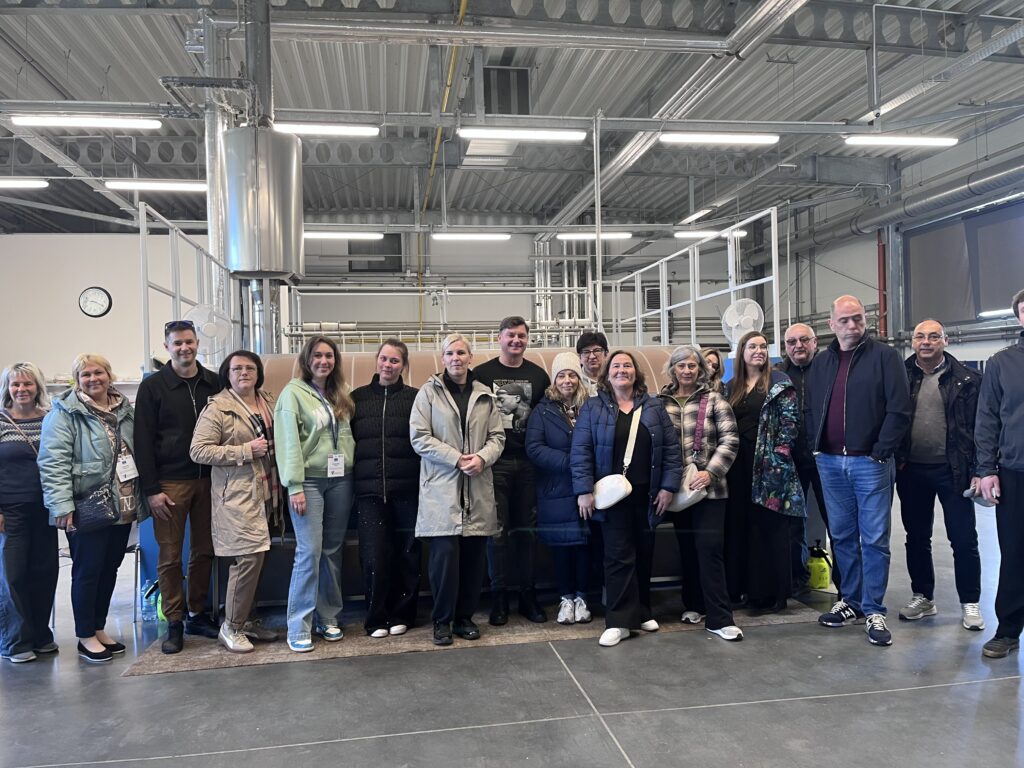
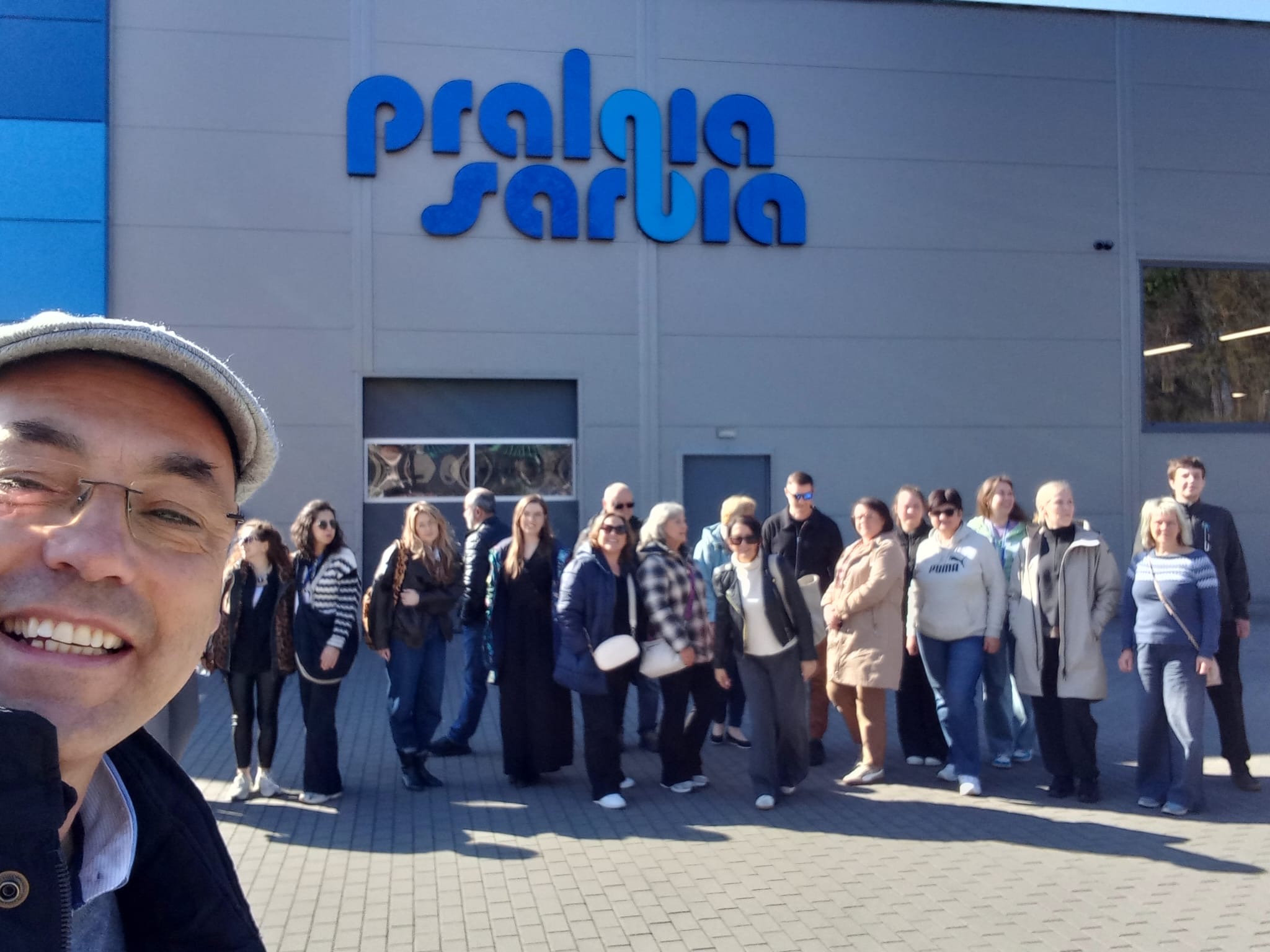
As part of the Erasmus+ project “Data Journalism for Climate Action” (DJ4CA) (2025-1-PT01-KA220-SCH-000349408), participants had the opportunity to visit an industrial eco-laundry located in Sarbia. The visit was organized as part of the so-called green practices, aimed at presenting real-life examples of sustainable solutions in industry.
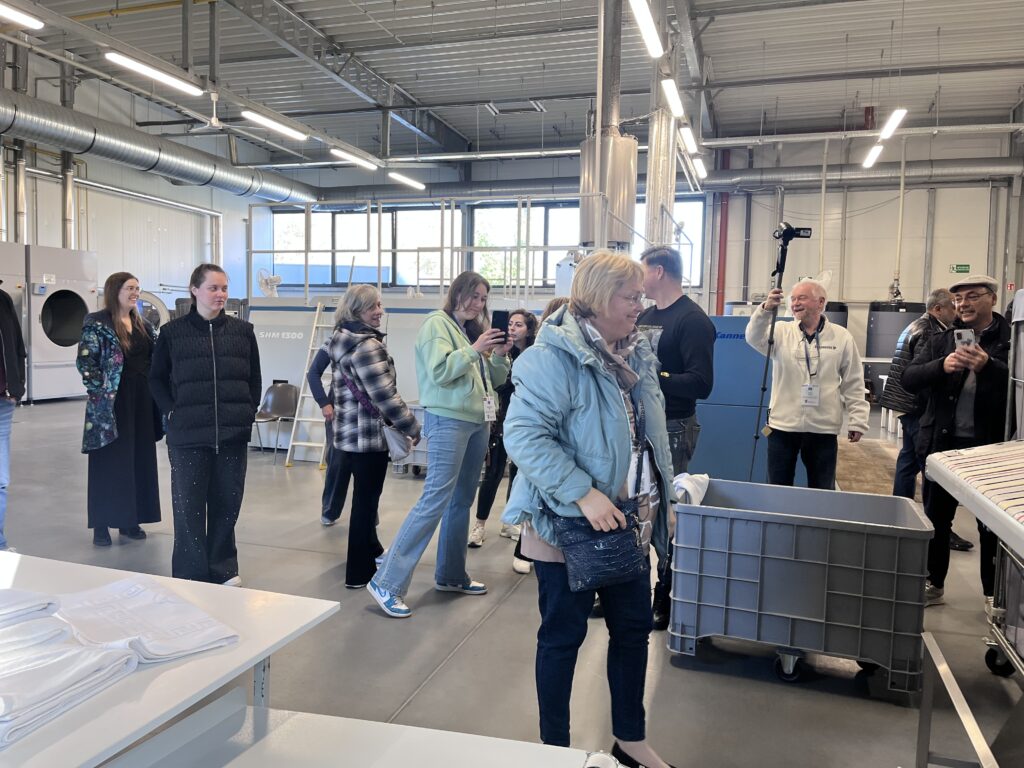
Modern Eco-laundries are designed to minimize environmental impact while maintaining high efficiency and service quality. The facility in Sarbia represents an example of effective use of technologies that optimize water, energy, and chemical consumption. The owner of PRALNIA SARBIA, Mr. Maciej Kawałek, guided the participants through the facility and presented how the laundry operates in practice.
Water plays a key role in the entire process and is heated using steam, which is the most efficient method used in industrial laundry systems. Steam is generated in a boiler room powered by natural gas. The steam generator reaches temperatures of up to approximately 180°C and requires around 30 minutes to reach full capacity, producing about 560 kg of steam. The steam is then used to power washing machines, mangles, and the hot water system.
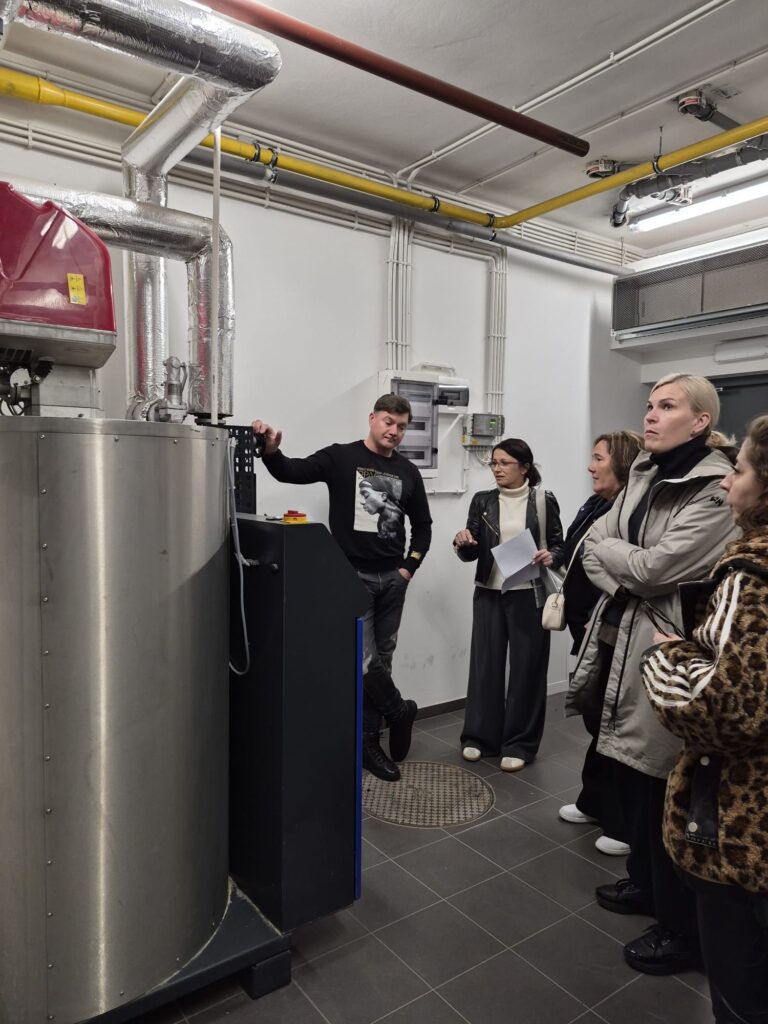
An important element of the installation is heat recovery. Excess thermal energy from exhaust gases released through the chimney is recovered using a heat exchanger. Water flowing through the coil absorbs this heat and is used to preheat water in storage tanks, significantly reducing overall energy consumption.
The facility also includes a water recovery system. Under the washing machines, there is a tank with a capacity of approximately 6000 litres, where water from washing processes is collected. After filtration, it can be reused in the initial stages of washing, which reduces fresh water consumption. Water is also separated—chlorinated water is discharged, while non-chlorinated water is reused.
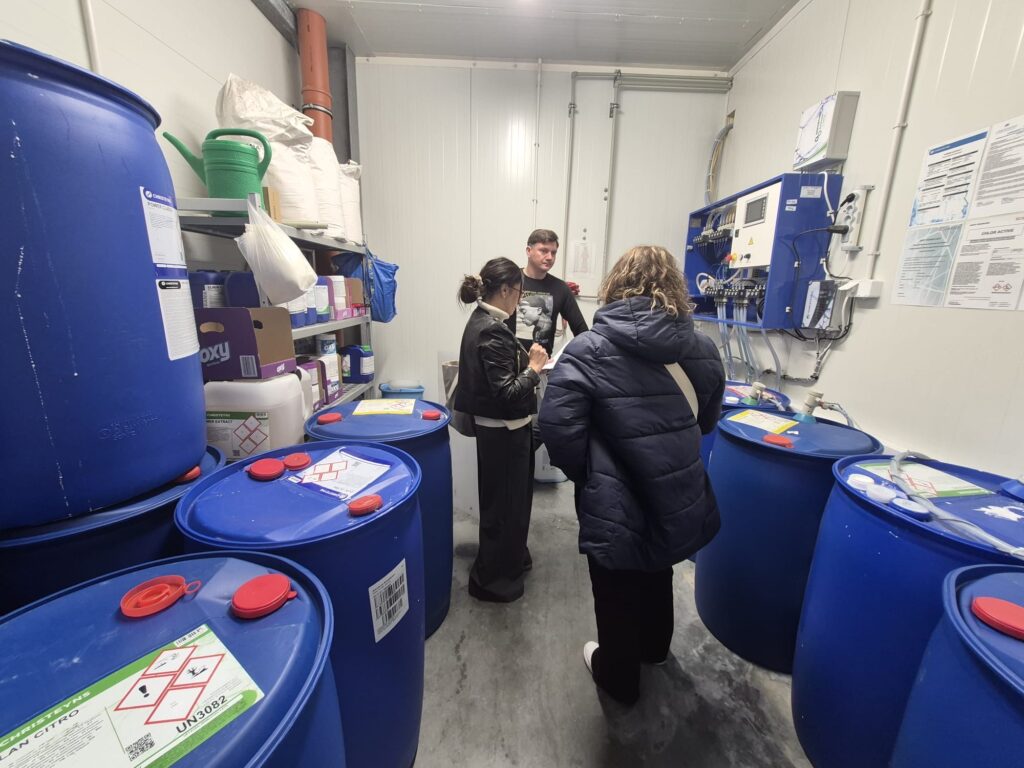
The industrial washing machines in the facility are designed for large loads of up to 60 kg. The machines automatically adjust water levels, temperature, and chemical dosing depending on the load size and type of textiles, which increases efficiency and reduces waste. An automated chemical dosing system further supports sustainability by precisely controlling detergent usage. The system recognizes textile types, such as towels or bed linen, and selects the appropriate washing program.
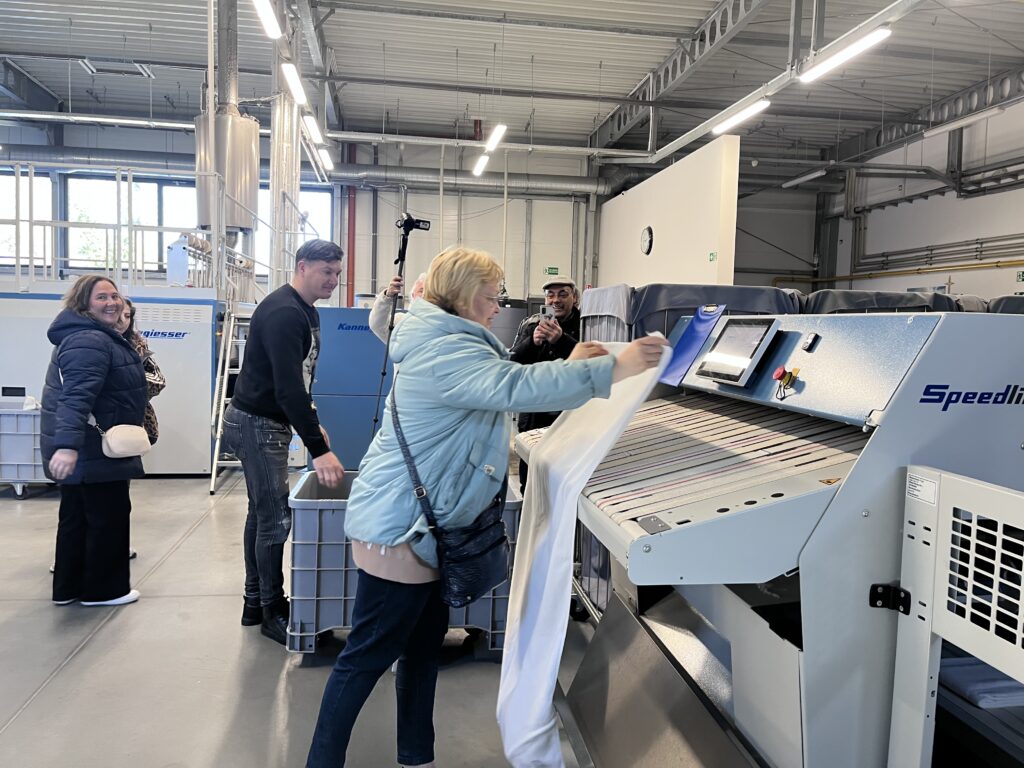
One of the challenges is heat management, as the system generates large amounts of heat, especially during summer. Therefore, effective cooling and ventilation are essential for safe and efficient operation. This also applies to equipment such as the mangle, which operates at high temperatures. A particularly interesting technological solution is the automatic towel folding machine, which uses compressed air (around 8 bar).
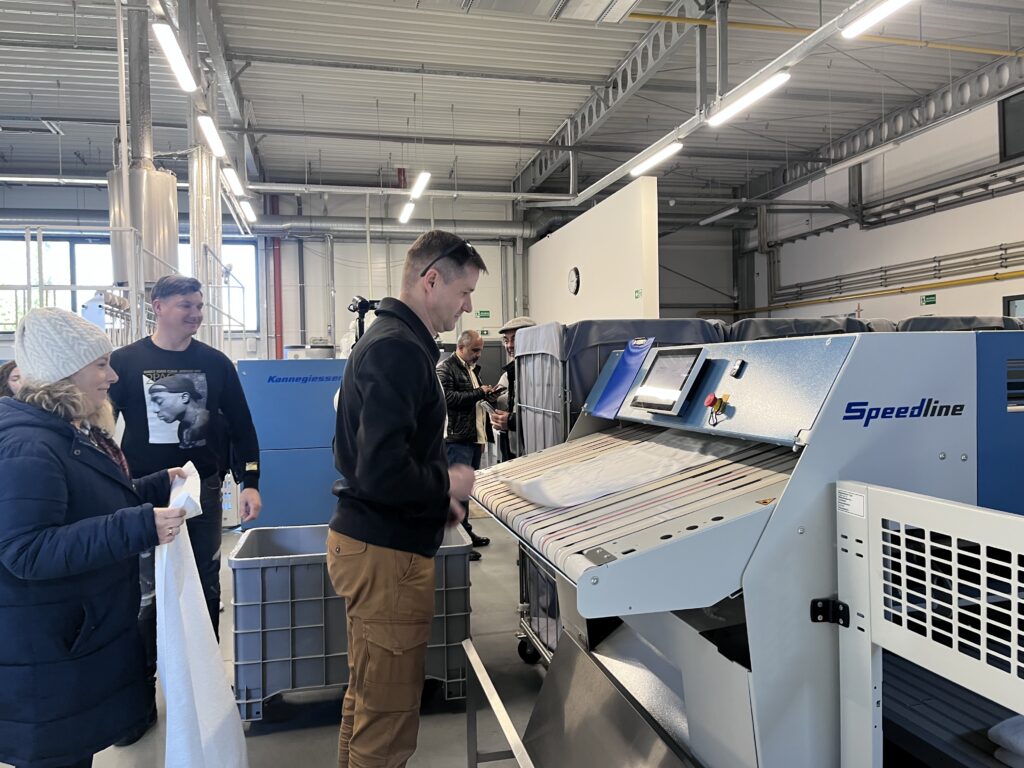
The eco-laundry in Sarbia was designed in 2018. Although the construction process went smoothly, the COVID-19 pandemic caused delays. Eventually, the installation was completed and is now operating as a modern and sustainable industrial system.
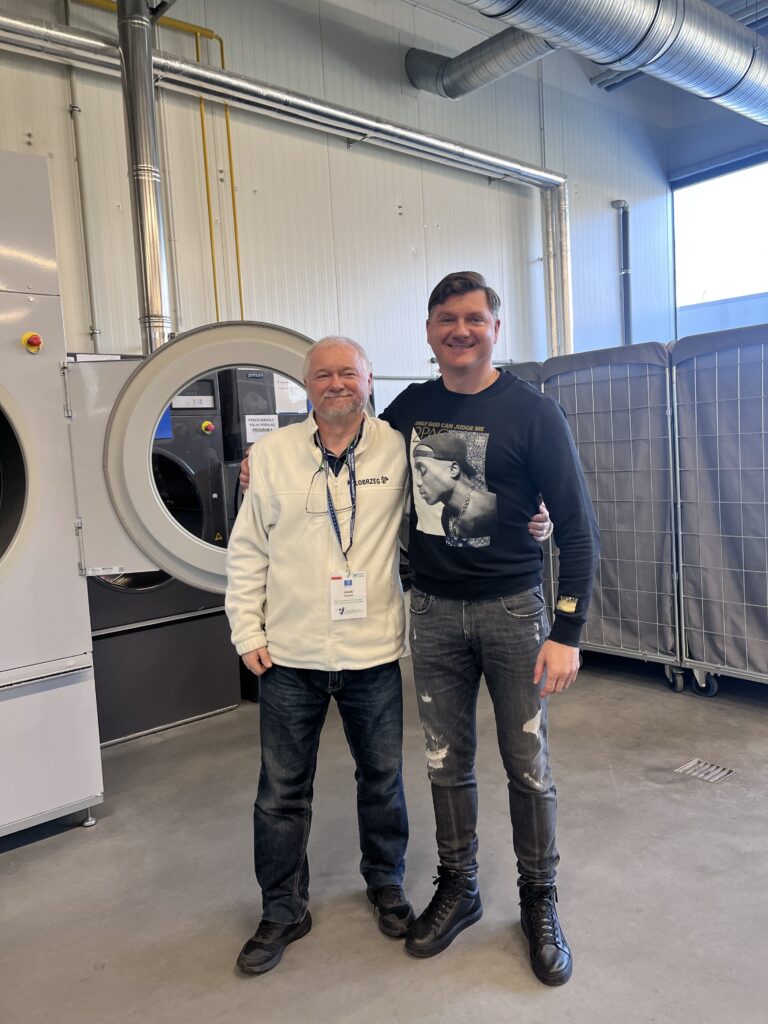
The visit provided participants with valuable practical knowledge about the application of eco-friendly solutions in industry and demonstrated how modern technologies can reduce environmental impact while maintaining high production efficiency.