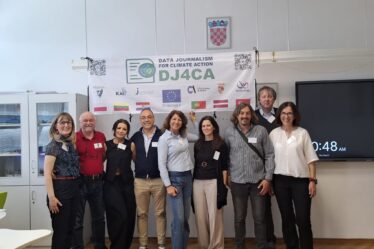
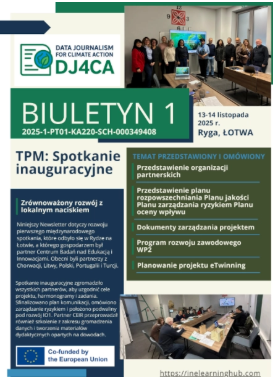
The kick-off meeting of the “Data Journalism for Climate Action (DJ4CA)” project marked the official launch of international cooperation between partner institutions from Portugal (project coordinator), Latvia, Croatia, Lithuania, Poland, and Turkey. The meeting provided an opportunity for partners to get to know each other, present their institutions, and align their expectations, roles, and responsibilities within the project framework.

During the meeting, participants discussed the main objectives of the project, including the development of students’ and teachers’ competencies in data journalism, climate education, and digital literacy. Special attention was given to the interdisciplinary nature of the project and the importance of integrating climate-related topics into various school subjects. Partners also reviewed the planned activities, timeline, and expected outcomes, including the development of intellectual outputs such as teacher training programs, educational materials, and an interactive e-learning platform.

A key result of the meeting was the collaborative development of a joint newsletter, prepared in the six languages of the project partners. This multilingual publication was designed to ensure accessibility and inclusiveness for all participating communities. The newsletter presents the project’s goals, planned activities, and highlights the significance of data journalism as a tool for understanding and communicating climate change issues.
In addition, the meeting established effective communication channels and collaboration methods among partners, including regular online meetings, shared digital workspaces, and clear reporting procedures. The importance of dissemination and visibility was also emphasized, with partners agreeing on strategies to promote the project at local, national, and international levels.
The newsletter serves not only as a summary of the kick-off meeting but also as a promotional and informational tool aimed at engaging school communities, students, teachers, and local stakeholders. It supports the dissemination of project results and strengthens international cooperation, fostering a shared commitment to climate awareness, critical thinking, and responsible citizenship.